

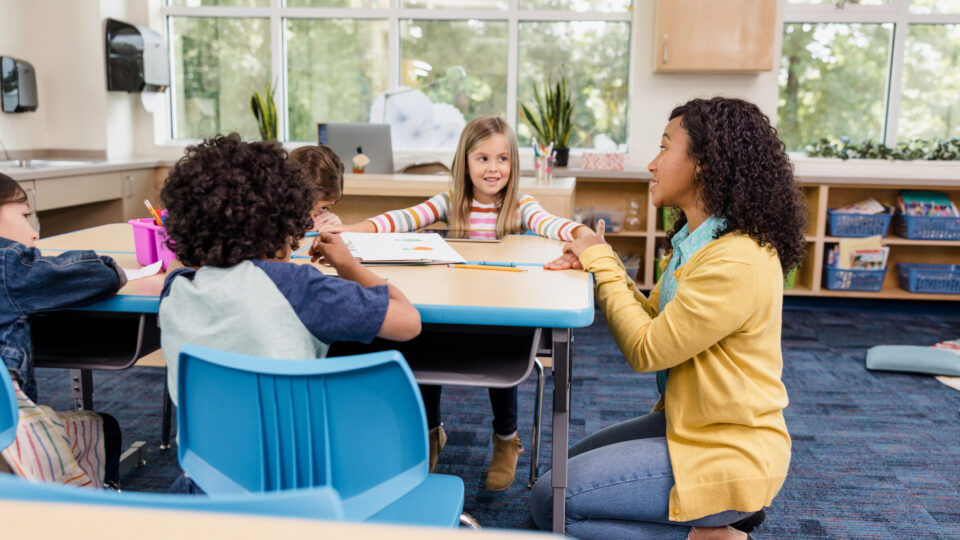
Parents often notice that their child participates differently depending on the size of the classroom. In a large class, some students thrive – but many hold back. In contrast, small-group environments create space for every child to be seen, heard, and supported.
At Little Mountain, our small class sizes are intentional. They allow teachers to build strong relationships with students and create an atmosphere where confidence grows naturally.
Every Child Has a Voice
In a small class, students can’t disappear into the background. They feel safe enough to ask questions, share ideas, and contribute to discussions. This regular verbal participation strengthens communication skills and helps students express their thinking more clearly – an essential foundation for strong writing.
Teachers Can Teach, Not Manage
Large classes often require teachers to spend significant time managing transitions and group dynamics. With fewer students, teachers can focus on teaching. They have the time to check on each child’s understanding, respond to individual needs, and offer meaningful feedback rather than quick corrections.
Students feel supported instead of rushed, and learning becomes more personal.
Confidence Grows Faster in Small Groups
Quiet or cautious learners often blossom when they’re part of a group small enough to feel safe. They begin to take academic risks – reading aloud, sharing their writing, or volunteering answers. These small moments of bravery build long-term confidence, which carries into school classrooms and beyond.
Peer Learning Happens Naturally
In a small group, students learn from one another in authentic ways: discussing ideas, comparing approaches, and hearing how classmates solve problems. This collaborative learning is harder to achieve in large classes, where time is limited and only a few voices can be heard.
A Strong Foundation for Communication and Writing
When students can talk through their ideas, receive individual guidance, and participate regularly, their reading and writing skills strengthen quickly. Small-group learning helps them organise their thoughts, use richer vocabulary, and feel proud of their progress.
If you’re curious about how your child responds in a small-group environment – or whether it might be the right fit – please reach out. We’re always happy to share more about how our class structure supports confidence, communication, and academic growth.